Political psychology, political behavior, and causal inference
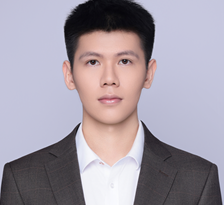
I am LI Jiajun (Leo), a PhD student in Social Science at The Hong Kong University of Science and Technology. I study how political narratives, institutional presence, and symbolic space shape attitudes and behavior.
My research combines survey and experimental methods with computational social science to identify response bias, trace mechanisms, and estimate behavioral effects in politically sensitive settings.
Current Position
PhD Student, HKUST
Supervisor
Prof. David Hendry
Methods
Causal inference + experiments + computational methods
Research Focus
Featured Research
The Long Shadow of Heroes: Martyrs' Cemetery, Patriotic Education, and Street Crime
This project examines how political memory embedded in public space shapes social order. Using geocoded crime data and a staggered Difference-in-Differences design, I find that Martyrs' Cemetery Parks reduce nearby crime, especially property crime, with effects varying across distance and commemorative periods.
Reticence or Theatrics? Grassroots Cadre Presence and Political Response in Surveys
This paper studies how grassroots cadre presence changes responses to sensitive survey questions. Using four waves of CFPS (2012-2018), RAG and in-context-learning simulations, and implicit association tests, I show that responses shift toward politically preferred answers through authoritarian cognition.
The "Chickening-Out" Judge: Adjudicating Clan Disputes in Court
An ongoing project on adjudication dynamics and judicial behavior in clan dispute cases.
Research Agenda
- Political behavior and political psychology under authoritarian settings
- Public memory, patriotic education, and behavioral outcomes
- Survey response, social desirability bias, and interview context
- Causal inference and computational approaches to mechanism testing
For fuller abstracts, figures, and paper links, visit the Research page.