Research
My research sits at the intersection of political behavior, political psychology, and Chinese politics. I am particularly interested in how political narratives, local institutional presence, and public memory shape both expressed beliefs and observable behavior. Across projects, I combine survey and experimental methods with computational approaches to study sensitive political attitudes, social desirability, and the behavioral consequences of symbolic political environments.
Working Papers
The Long Shadow of Heroes: Martyrs' Cemetery, Patriotic Education, and Street Crime
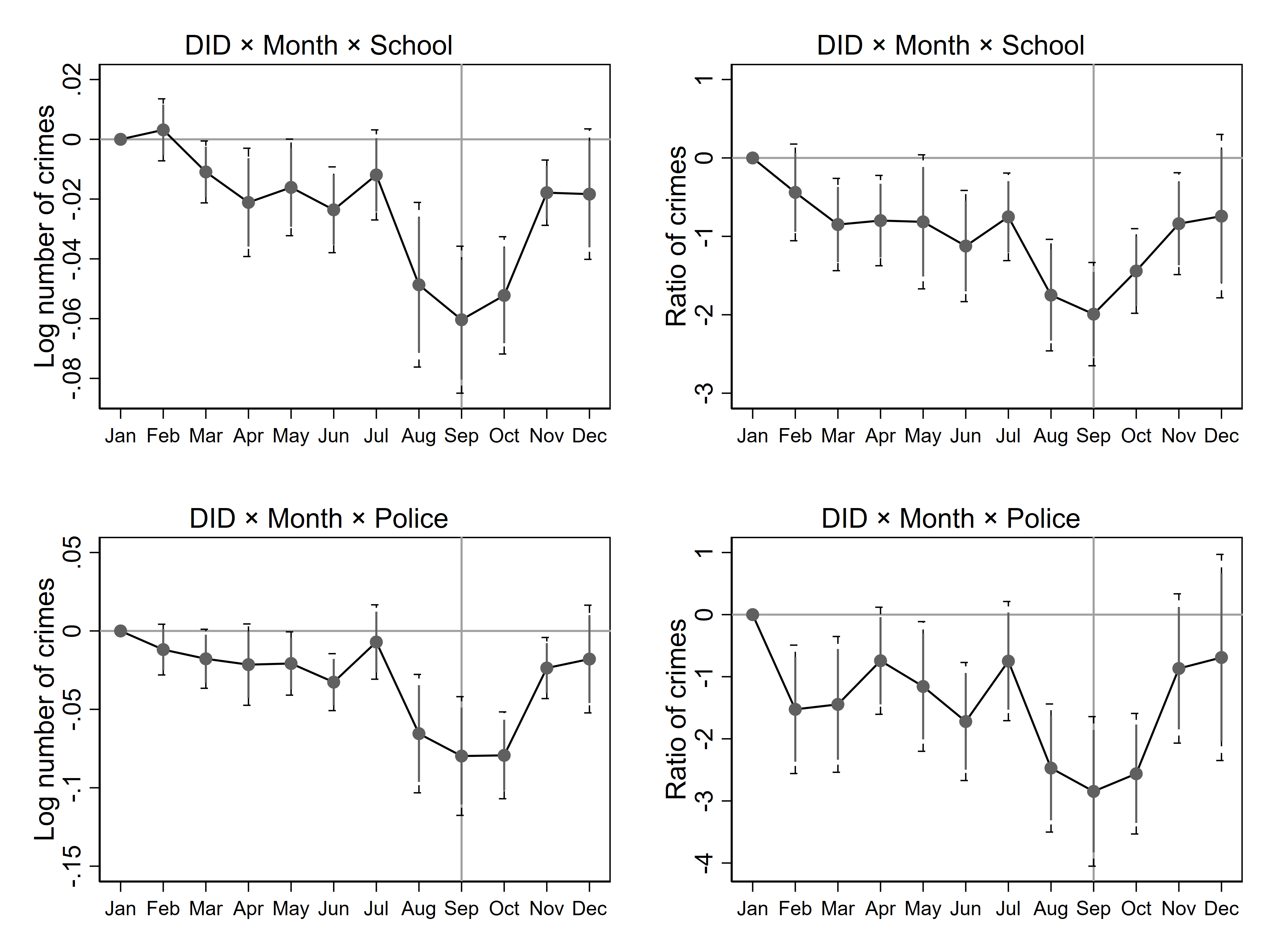
Moving beyond the standard distinction between formal and informal social control, this paper examines how the state may influence behavior by embedding political and historical narratives in physical space. Drawing on geo-coded crime data and a staggered Difference-in-Differences design, I find that the establishment of Martyrs' Cemetery Parks is associated with a significant decline in nearby crime, especially property crime.
The effect attenuates with distance and appears to operate through two channels: spatially, through the clustering of patriotic education venues rather than increased police deployment, and temporally, through commemorative activity concentrated between August and October. Complementary evidence from a vignette experiment and instrumental variable estimates derived from a national survey suggests that memorial architecture can foster social order through implicit moral suasion rather than direct coercion.
Reticence or Theatrics? Grassroots Cadre Presence and Political Response in Surveys
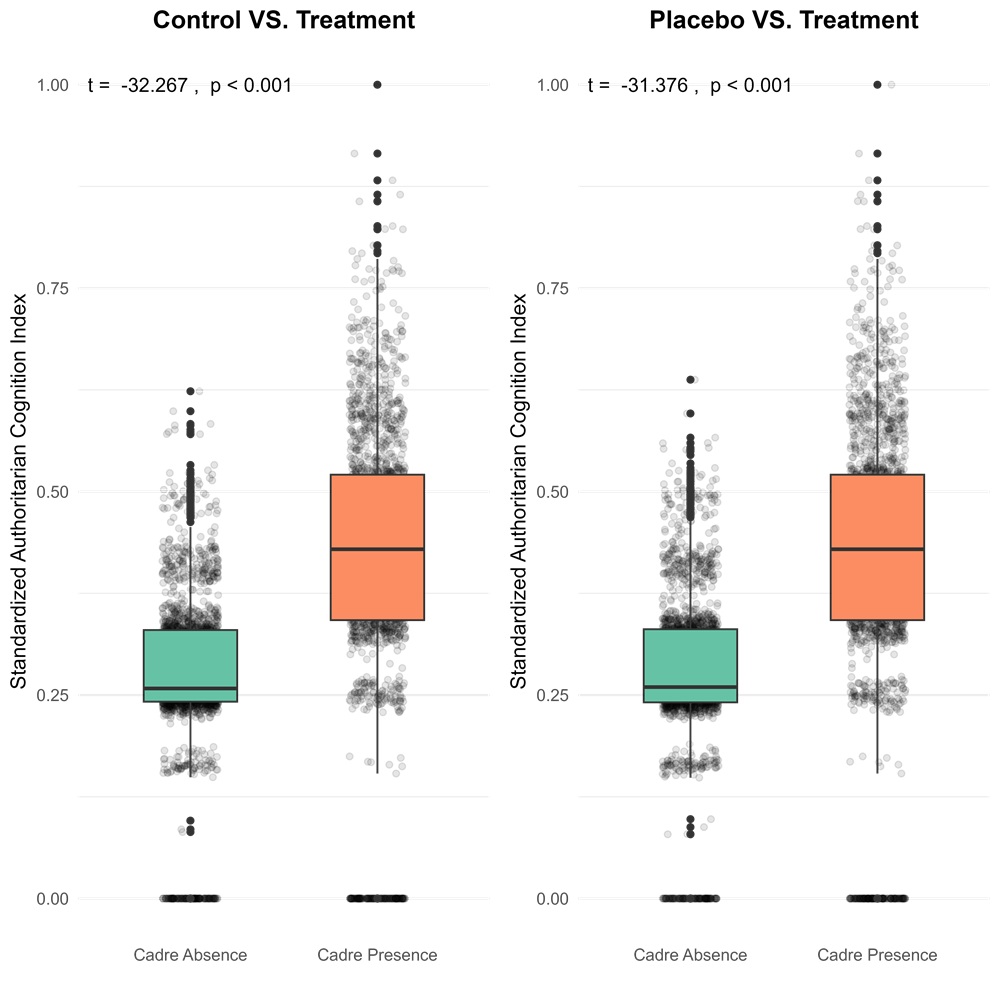
Survey research often struggles to address response bias, yet it rarely treats the interview context itself as part of the causal mechanism. This paper examines how the presence of grassroots cadres affects answers to political survey questions. Using the China Family Panel Studies from 2012 to 2018, I show that cadre presence induces social desirability bias rather than straightforward self-censorship across both positively and negatively framed questions.
Respondents interviewed in the presence of cadres are more likely to over-report trust in local officials and under-report unfair treatment or conflict with authorities. I complement the observational analysis with randomized controlled trial simulations using retrieval-augmented generation and in-context learning, together with implicit association evidence, to argue that authoritarian cognition plays a central role in shaping these responses.